Showing posts with label Marjorie Snowden Brigham. Show all posts

June 7, 2013

Happy 98th Anniversary Ruby & Ganny!

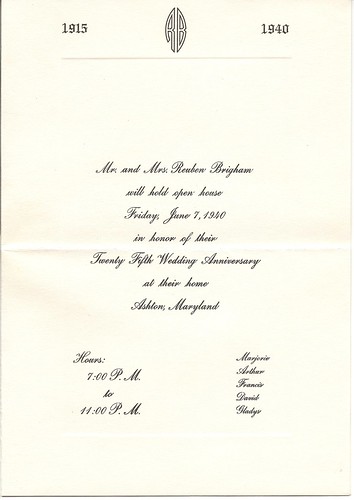
Reuben and Marjorie Brigham silver anniversary invitation

From The Annals of Sandy Spring, Volume V, 1929-1947, edited by Herbert Osburn Stabler, published by American Publishing Co., copyright 1950, p. 181:  On June 7th [1940], the Brigham children gave Reuben and Marjorie a reception in honor of their 25th anniversary.

Reuben and Marjorie Brigham silver anniversary envelope

February 19, 2013

Polaroid album

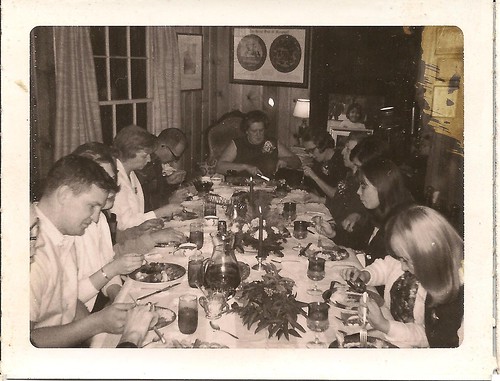
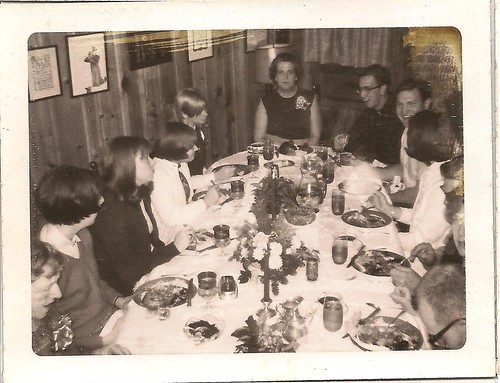
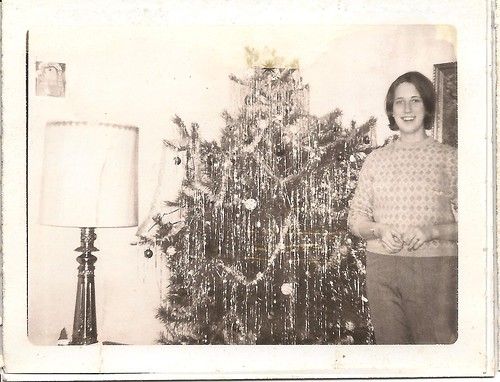
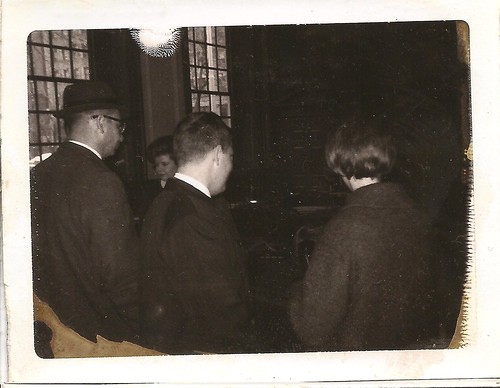
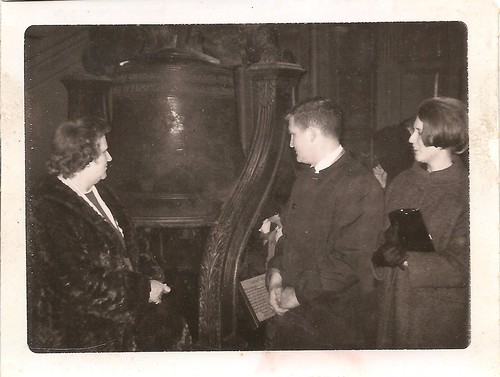
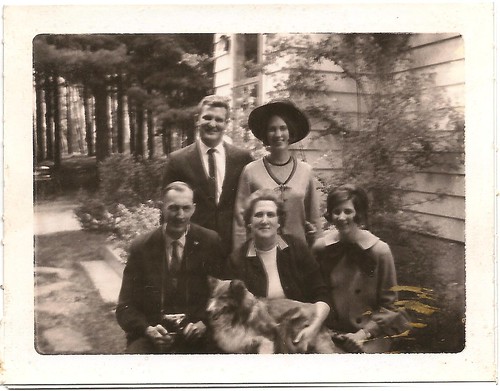
My mother gave me a little red Polaroid album a while back, and I have finally gotten around to scanning the pictures. The photos begin with Thanksgiving and Christmas at Foxley, then a trip to the Liberty Bell in Philadelphia, and finally Easter photos in the front yard at Foxley. Polaroids were certainly fun and convenient--but they don't have a date printed on the back of them like processed film. I know that the Polaroid Swinger camera was produced between 1965 and 1970. The photos are certainly from that era. Julie and Rich were married in 1967, and they appear together here, possibly in their first home in one. Ganny died in July 1970, and Doc Bussler died in 1972. Do you see Anna Bussler in any of the pictures?--she died in October 1967. I'm going to do my best to identify everyone below the photos, but please help me if you know who is in the pictures and when they were taken. Thanks!

Foxley Thanksgiving 1960s

Thanksgiving at Gladys and Dave's home Foxley. Around the table clockwise: Young Dave's eyeglasses and nose (my father), Rich, Julie, an unknown man whose hands are in the picture, Dottie, Vernon, at the head of the table is Gladys (my grandmother), unknown young lady, Ganny (my great-grandmother), the top of Pat's head, unknown young lady with dark hair, Liz in white sweater holding food (my mother), and unknown young lady with blonde hair. One of the unidentified young ladies is probably Dottie's daughter Anita.

Foxley Thanksgiving 1960s

Thanksgiving at Foxley, around the table clockwise: Ganny (my great-grandmother), Pat , unknown young lady with dark hair, Liz (my mother), unknown young lady with blonde hair, at the head of the table again is Gladys (my grandmother), Dave (my father), Rich, Julie, unknown man, Dottie, and Vernon Swiger.

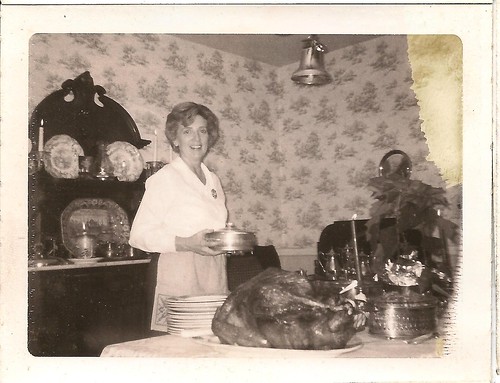
Foxley Thanksgiving 1960s

My grandmother's sister Dorothy Beall Swiger. This is the dining room at Foxley on Thanksgiving.

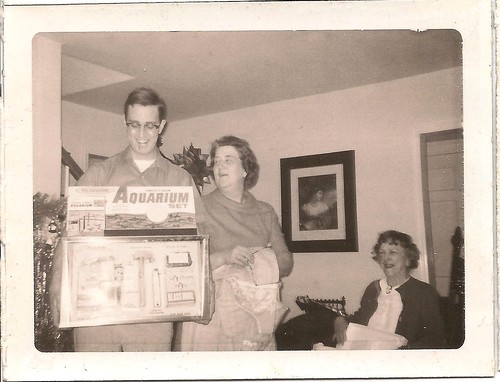
Foxley Christmas 1960s Dave gets an aquarium

Christmas at Foxley: Dave unwrapping an aquarium set (my father), Gladys cleaning her glasses (my grandmother), and Ganny (my great-grandmother).

Foxley Christmas 1960s Julie with the tree

Julie next to the Christmas tree. This does not look like Foxley--maybe it was taken at her new home with Rich.

Liberty Bell 1960s a

Liberty Bell 1960s b

It looks like my grandparents went to see the Liberty Bell with Julie and Rich. The first photo shows the backs of heads: stranger, Rich, and Julie. The second shows Gladys in a fur coat, the Liberty Bell, Rich, and Julie. This is perhaps the fur coat my grandfather gave her as a Christmas gift one year, wrapped in a garbage bag.

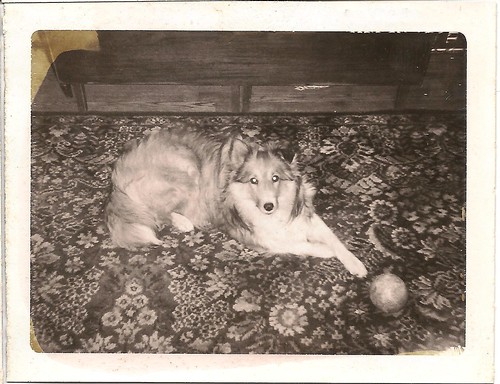
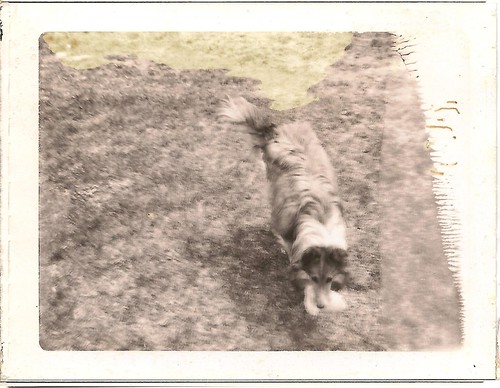
Foxley collie dog 1960s 2

Foxley collie dog 1960s 1

Always collies at Foxley. This little one appears prominently in the Easter photos, too.

David L Brigham sleeping after dinner

Dave (my grandfather) snoozing in a wingback in his stocking feet.

Doc Bussler 1960s

The bow tie is a dead giveaway: this is Doc Bussler.

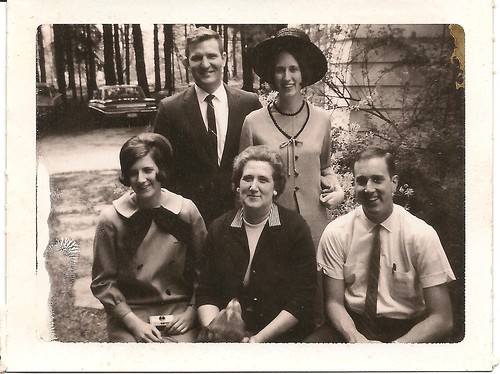
Foxley Easter 1960s

Foxley Easter 1960s

Easter at Foxley, clockwise starting at the top: Rich, Julie, Young Dave, Gladys, and Pat.

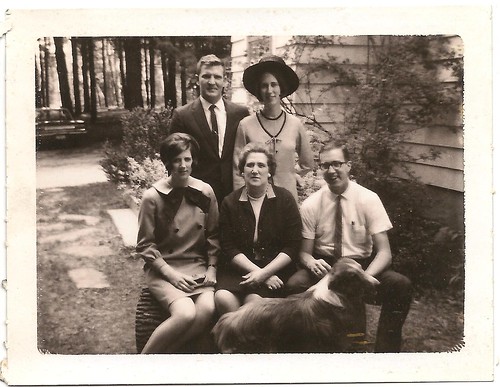
Foxley Easter 1960s

Easter at Foxley, clockwise starting at the top: Rich, Julie, Pat, Gladys, and Big Dave.

September 28, 2009

Family Cemetery at Glyndon

Each Memorial Day the gravesite is groomed and bedecked with fresh flowers and an American flag. But most of the year it is quiet and plain and tucked in the edge of the woods.


The monuments here are as follows: headstones for Reuben Brigham and Marjorie Snowden Brigham; a bench given by University of Maryland class of 1908; and a sundial "from friends in agriculture."


The inscription on Reuben's headstone is "The Old Knight's Vigil" by Alfred Noyes:

ONCE, in this chapel, Lord,
Young and undaunted,
Over my virgin sword
Lightly I chaunted,
" Dawn ends my watch. I go
Shining to meet the foe.

" Swift with Thy dawn," I said,
Set the lists ringing !
Soon shall Thy foe be sped,
And the world singing :
Bless my bright plume for me,
Christ, King of Chivalry.

War-worn I kneel to-night,
Lord, at Thine altar.
O, in to-morrow's fight,
Let me not falter.
Bless my dark arms for me,
Christ, King of Chivalry.

Keep Thou my broken sword
All the long night through
While I keep watch and ward.
Then, the red fight through,
Bless the wrenched haft for me,
Christ, King of Chivalry.

Keep, in Thy pierced hands,
Still the bruised helmet.
Let not their hostile bands
Wholly o'erwhelm it.
Bless my poor shield for me,
Christ, King of Chivalry.

Keep Thou the sullied mail,
Lord, that I tender
Here at Thine altar-rail,
Then let Thy splendour
Touch it once . . . and I go
Stainless to meet the foe.


The inscription on Marjorie's headstone reads, "To thine ownself be true."


September 22, 2009

June 1971

It was just a short article in a promotion booklet. I took time to see it had been written in, for and about conditions in another country. Nevertheless, I could hum the opening lines:

"Everybody's talkin' at me
Don't hear a word they're sayin',
Only the echoes of my mind."

The message kept ringing as I walked alone on the streets of the Capital City of the greatest nation on earth.

These words were from the them song of the film Midnight Cowboy telling of a lonely young man in a big city. The small town boy had lost his ability to communicate and thereby the essential ingredient to keeping one spiritually alive. To me they asked what happened? Why do we experience such uncertainty? What is there for us to hold to? What gives life direction? Who sets the pace? Who leads? Why make the effort? Who botched up what? Why am I urged to straighten out some of the mess?

Several of my friends had a vital discussion over a simple lunch. Can't you hear the reaction? What's the use of writing a column, or even a letter? People don't take time to read anymore. A glance through the newspaper and never a good book!

We are in a great rush to nowhere and we have the means to pay for things to be done for us. Why fight it?

These thoughts don't help when you are looking for the right way to communicate something you want to say or that you hope folks will want to hear and relate to.

Then came the bold. YOU ARE PART AND PARCEL OF THE PILL GENERATION. It all began with that aspirin your mother gave you years ago. Certainly your kids have known nothing else. Every shape and color; in fancy containers and plain; but always handy.

True, it all began with mom. She tranquilized by reading stories children liked to hear, reciting poetry by the hour and re-telling those "hand-me-downs" from previous generations. All were designed to relate to the peace of mind and the education of the upcoming generation.

We were supposed to be a little poor, maybe a little hungry, clothes a little worn and torn, hands grubby on occasion, and discouragement part of a regular diet.

If treatment was needed, there was a home remedy--like lemon, sugar and kerosene for coughing spells; iodine that stung for cuts and scratches; mustard plaster for congestion; argerol and ipicac [ipecac] (can't spell 'em but sure can taste 'em); and then the spring "line up kids and we'll clean out the winter"--each in turn gulped a tablespoon of castor oil.

What happened to the Sunday visits? The picnic trips with the whole family? Are there still places to go and things to do--as a family? Do we need a pill to escape or to relax? Do we need another to sharpen the intellect, to reassure, to give courage? Whey do I need to be confused to boost my morale and pull me out of a depression? My old Sunday School teacher used to say, "Don't count sheep; talk to the Shepherd." Sometimes that worked.

So many are worried. Things are already distorted and we either don't know how to face our times or we don't want to. It's so easy to pick up the many-sided safety valve "The devil made me do it." There's a pill for everything and we are the generation of pills.

It's tough to relate when the terms are over your head and the kids see you and your limited exposure as the root of the problem. To you a trip is travel, a pot belongs under a bed, and hooked is something mom did to make a rug.

The youngsters can't relate to the hydraulic ram, the wooden water tank, a stopped overflow and water from the attic to the basement with plaster falling behind. Coal oil lamps and candles, chunk stoves and feather ticks, soap stones and crocks, three point two and Goose Goslin, all need explaining.

So they come back with kicks and distortions, pot and love-in, beautiful and Hotline, grass and hard rock music, Mary Jane and free love.

Maybe we need to find the time to study our vocabulary. We who are older have made the journey and we know. Those who are younger will soon be the ones who can recount the experience and just hope the even younger generation will not go quite as far and fast as they did. But they know they will!

Somehow, I don't mind telling you about a 19 year old boy and his dad. They related and understood, although the language was a shade different. The young fellow came down to breakfast on Sunday morning. He was greeted with "Son, you turned in mighty late last night." There was a ready explanation for the 2:00 a.m. arrival. "Don't you see, Dad, the ole Model-A froze up and she boiled over. I took the radiator cap off to see what happened and it blew off in the big snow drift over on the middle pike. I looked and looked but never did find it again."

The response was unexpected. "Yes, Son. Well some years ago your Mother and I were courting. We had old Nancy to the buggy and came around past Highland and over Mink Hollow Road. On the way the lap robe bounced out of the back of the buggy, and it took up tow hours to locate that darn thing."

Sometimes there are older people who have a story to tell. I remember the same 19 year old boy who managed to get pifilated on 3.2 beer when he was two years below the legal age limit for purchase and consumption.

I have seen parents who must cap a difficult and frustrating week with "just a few" to put the memories away for a spell. Then they wonder what makes a kid seek escape from a hard and frustrating week at school with a slightly different approach.

There is a role for recreation in our society. Simple things like walks in the woods, picnics and croquet. Maybe we can read a little to relax. When did you learn you last poem or listen to the birds sing early in the morning.

There is a free society and we do have a free life. There is even freedom to self-destruct if we don't find the way to relate and communicate and love in the broadest sense.

Don't look for answers in terms of economic or social levels. Race and religion are both involved and concerned, nor have they found all the answers in the image of man or the hope of faith. When I was a youth I asked for guidance. My college professor said, "You are often guilty by association." From my mother came, "A man is known by the company he keeps." Dad got right to the point, "If you lie down with dogs, you will get up with fleas."

David L. Brigham
Executive Director

August 28, 2009

January/February 1971

There is always a gate. Sometimes it is swinging in, and at other times, swinging out. For every gate there is an experience. There are people to relate to the gate whether it be of wood, metal, or stone.

Some gates are ornate, and others brightly painted. Some are rusty, creaking, and only half on an abandoned post. Always the gate is engaged in a struggle against the elements created by both nature and man.

At the gate there are always hopes, memories, ambitions, and experiences. Of all the creations, these vital ingredients have been reserved for man alone. Both the generosity and the responsibility of these gifts are overwhelming. Thankfully, there is a balance which causes the gate to swing in one direction with pressure, and in another with pull.

As we reach into the tomorrow of yet another year, we must close our gate on some great events which are now history. All of us have our own reflection as we see an old year out and anticipate the new. I trust that you will have your own parade of thoughts as I relate my own gate experiences.

In the past year a gate was opened for a member of our family. This was a farewell gate for one who had seen nearly 82 years as a treasured component of our inner circle. She was the one who had laughed with such understanding when a small boy on a very black night was encouraged to set a new record for the 100 yard dash. The route was from the barn to the back porch and was initiated by the groan of a rusty hinge supporting a sagging gate.

She it was who often summed up the ambition of this youth with the impossible goal, "He's all too often reaching for the moon." She lived long enough to hear her little granddaughter say, "I used to think Daddy was so tall he could walk up on a stepladder and touch the sky." In the time of that grandmother, other young Americans opened the impossible gate--reached the moon and walked upon it. It couldn't be done and yet is was...in 1970.

Hardly had that departing latch dropped before another was being lifted to accommodate someone coming in our gate. For those who are interested, there is a grandson. We have our miracle and he picked my birthday to enter the gate.

Undoubtedly, gates are important, and for some 17 years I sat on a great campus where I could watch the arrival of young men and women as they walked between the great brick posts and under the identifying ironwork. For many this was a giant step which would be appreciated and assimilated.

The bricks and mortar were there, the knowledge of generations waited in the library, and many fertile minds were ready to share the largest word in research and discovery. Like the structure of bricks and the mortar, knowledge is built on fact and finding, a step at a time.

Each generation adds a segment to the great mosaic of life. All too often there are those who exit through the gate after a short struggle, for the campus hills offer a challenge. Others see the green grass which borders the pathway lading to the great outside and depart. For some, it will remain green, but for most, it will lose its vigor as the distance from the gate increases.

Fortunately, there are many who have the means, the stamina, and the desire to complete the experience and enjoy not only the climax parade before family and friends, but also the fruits of effort.

It is difficult for us to look at the interesting experience we call life without realizing that each generation and each year goes beyond that which preceded it. Somehow the combination of the certainty of yesterday gives the hope that is required for tomorrow.

Indeed the story is an old one, but deeply significant...So many have not heard it yet...The young man left home and walked through the gate to seek his fortune in his own way. For a time those who had contributed most to his preparation were forgotten and ignored.

The years passed and an aging mother and father received a letter. Briefly it stated, "I will be on the train next Wednesday. If I am welcome at home, after the years of heartache and neglect I have caused, please hang a white cloth on the cherry tree at the edge of town. If there is no cloth, I will know I am not welcome."

When the train reached the town limits, a passenger viewed an old tree completely covered with bed sheets.

It has been good to re-live old days, but it means even more to be a part of the preparation for an unexplored tomorrow. I think I'll spend a few moments with the thoughts of the English school teacher in India.

She faced an uncertain road, and her answer may well have a message for the League, for the leadership, for 150,000 members representing 58 federal agencies and for you and for me...

"And I said to the man who stood at the gate of the year: 'Give me a light that I may tread safely into the unknown.' And he replied, 'Go out into the darkness and put thy hand in the hand of God. That shall be to you better than a light and safer than a known way.'"

David L. Brigham
Executive Director

August 20, 2009

Profiles of Reuben Brigham


From the website of the Association for Communication Excellence in Agriculture, Natural Resources, and Life and Human Sciences:

The Reuben Brigham Award is offered in memory of Reuben Brigham (1887-1946), a native of Marlboro, Mass., and graduate of the University of Maryland. He served as an extension editor and 4-H Club agent in Maryland and was called to the Federal Extension Service office in 1917 to develop an editorial and visual aids service for extension editors. Brigham traveled the nation, conferring with editors and directors, and helped states develop their own editorial offices as separate units.

He organized the American Association of Agricultural College Editors and served as its president, secretary and treasurer. He established the Extension Service Review in 1939 and participated in the Farm and Home Hour of the National Broadcasting Company. During the Depression, he helped develop action agencies of the Agricultural Adjustment Administration. As head of a regional section of the AAA information office, he ensured that extension staffs were involved in that organization’s information plans. He later was appointed assistant director of the Federal Extension Service and was associated with extension directors, the land-grant college association and policy-making committees of the U.S. Department of Agriculture. Brigham died in Chicago while attending a meeting at the National 4-H Club Congress.

The Reuben Brigham Award, established in 1947, is reserved for a communicator, including a public relations or advertising professional, who has made a a major contribution in the field of agriculture, natural resources, or life and human sciences at the regional, national or international level. Active and retired members of ACE, a land-grant college or university staff, or USDA staffs are not eligible for the award. (Click for a list of past winners.)

* * * * *

A profile from the ACE retirees website:

Reuben Brigham. President 1924-25. U. S. Department of Agriculture

Reuben Brigham was born Dec. 13, 1887 in Marlboro, Mass. He was the son of a farmer and professor of agriculture. He graduated from the Maryland Agricultural College (later the University of Maryland) in 1908. For the next five years he operated a farm in Maryland, then returned to the university in 1913 to serve as secretary of Alumni Affairs to the university president. When the Smith-Lever Act established the extension service later that year, he joined the Maryland College of Agriculture staff where he was their first extension editor and 4-H club agent.

In 1917 he joined the U.S. Department of Agriculture’s extension service in Washington, D.C. to develop an editorial and visual-aids service for extension editors. He also started the Extension Service Review magazine in 1930.

During the depression years of the 1930s, he joined the Agricultural Adjustment Administration (AAA) where he was in charge of a regional section of the “Triple A” information office. In this position, he “saw to it that the college editors of the nation were used in all information plans and that the local state extension staff, including the editor, was not by-passed. . ..” He later returned to the extension service and was named assistant director.

He died unexpectedly Dec. 6, 1946 while attending the National 4-H Club Congress in Chicago—one week short of his 59th birthday. Following Reuben Brigham’s death, Past President Frank Jeter (North Carolina) said, “Brigham has as much to do with the successful formation and organization of the American Association of Agricultural College Editors as any other one single person.” Since 1947 AAACE/ACE has given the annual Reuben Brigham Award to honor the contributions in agricultural, home economics, and rural communication of a person outside its membership—the organization’s highest award.

* * * * *

And finally the culmination of a recent research project by Scout Jim Bikel titled "Reuben Brigham: Legend Unveiled," dated March 21, 2009, about the founder and first scoutmaster of Boy Scout Troop #264. He presented his project to the 10th annual Montgomery County gathering for National History Day. I had the pleasure of meeting Jim Bikel--a very nice young man--and I think he did a great job here. I have inserted two minor corrections into the text, which appear within brackets and are italicized:

Introduction

As part of a competition for an extracurricular activity known as National History Day, I did a research project on Mr. Reuben Brigham, commonly known to you as the troop’s founder. National History Day is a competition that is similar to a science fair for history. This year, the NHD had a theme of legacy. They recommended that we each pick a person from any period of history to research, and to focus on their lasting impact on the community, nation or world. While others focused on more well-known characters such as John Wilkes Booth, Walter Reed or Dr. Bird, I chose a lesser known character that I knew impacted me. Reuben Brigham, I knew, founded our scout troop in 1927. I knew nothing else about him, and didn’t expect much. Instead, I found he left much more than a scout troop behind. Be aware that I write about only what I was able to find out, and it is likely that some information is missing.

Childhood Years and Early Background

Reuben Brigham was born in Marlboro, Massachusetts, on December 13, 1887. His early years were spent growing up on a farm. His father taught him the farming methods himself, and Reuben also went to many different schools. He grew up not only in America, but in several other nations, including Germany and Japan. Sometime, he moved to the United States again and settled in Ashton, MD. He went to the University of Maryland (known back then as the Maryland Agricultural College), and he then graduated in 1908. After his graduation, he farmed for five years until his life became interesting.

Parcel Post

Ever wonder how that package came to your door? Ever wonder who started the Parcel Post? Farmers in the United States long wanted a government parcel service, due to the high prices that private companies would require. You often had two choices with items. You could pay more than half the worth to ship your products east or you could let them rot while you haul them yourself over the Appalachian Mountains. The reverse was true with getting something. If you needed, say, a Model-T car-to-tractor conversion kit so you could use a gasoline engine instead of a stubborn mule to plow your fields, you would have to pay the evil railroad companies more than twice the value of the kit to ship it to where you could pick it up, or you could take the dangerous route east yourself to get the part, leaving your farm unattended and spending hard-earned cash on gasoline and such. The National Grange, a large nationwide organization that farmers used to unionize and advocate for farmer rights, had turned a blind eye to it. Mr. Brigham, of the Olney Grange, wasn’t about to let a good plan go to waste. (The Olney Grange was a branch of the Maryland Grange, a branch of the National Grange, which was formed as unions won battles in industry while envious farmers still struggled.) By encouraging congressman David J. Lewis to test its soundness in Congress, he managed to get it through. There were many points at which the Honorable David J. Lewis admitted he felt like giving up. He said that through Mr. Brigham’s bottomless enthusiasm, he managed to gain enough support to get the legislation passed. Farmers and city folks nationwide loved it. A farmer now did not have to spend near as much to get a stupid part, so he was able to expand his farm more rapidly, and the customers ended up paying much less due to the significantly lowered shipping costs. The only downfall to this legislation was that the railroad companies were going bankrupt (eventually leading some of them to unite as CSX.) So next time you receive a package at the door, think about how it all started-from that same man who founded our scout troop.

The Agricultural Department

Ever hear about the United States Department of Agriculture? (You know, that government agency that inspects meat, leaving a sticker on it if it looks good enough?) It was originally started to help farmers and ranchers become educated about their actions, work, and sanitation, and to clean up the meat-packing industry scandals. According to the Agricultural Extension Service, he was called to the Department of Agriculture in 1917 to take charge of producing visual and editorial materials. After serving a year in the army, he returned to the agricultural department. He worked in the Agricultural Extension Service, which was created for the purpose of gathering the above stated materials. In the Extension service, he created a magazine which is still published today, known as the Agriculture Extension Service Review. In 1933, he was placed in the Agricultural Adjustment Administration (remember learning about FDR’s New Deal in History Class?). There he developed a regional contact division, which was used as a public relations committee for the AAA and other depression and wartime agencies. (The AAA was later deemed unconstitutional by the Supreme Court.) Another of his extension jobs was being the 4-H Club leader to Maryland, and he eventually became the top figure in the national 4-H Club. The 4-H Club was an organization founded to teach farm youth the basics of farming and how to do it the right way (preventing another Dust Bowl), and to give farm youth a proper education and upbringing. In his work, Mr. Brigham was very dedicated. He would not give the people he needed to contact a telephone call or a proper letter, but instead he would go out there in person and talk and become friendly with the farmers. He was so attached to his work that he died of an ailment when he went out west to contact a few farmers in 1946.

Mr. Brigham and War

In 1918, a year after Reuben joined the Agricultural Department, he joined the army. He fought as one of millions of “doughboys” fighting in WWI for the Allies against the Central Powers. He only fought for a single year, and not too much is known about his actions, most likely because he was no one of high rank. Reuben’s children were all involved in WWII. His son, David Brigham, served in the Pacific, and his other son served in Europe. His daughter became an army nurse. Mr. Brigham understood how the Axis Powers saw the war from their point of view, instead of just the Allied view, having grown up in Japan and Germany himself.

Mr. Brigham and Family

As stated before, Mr. Brigham’s father had dragged Reuben’s childhood all over the world. Mr. Brigham married Marjorie Snowden on June 7, 1915 at Ingleside (Queen Anne's County, MD) [*correction by Barb - Ingleside was the name of Francis Snowden's home located south of Ashton, MD, on what is now Route 650 New Hampshire Avenue]. Mr. and Mrs. Brigham were devout Quakers, and played a role in the Sandy Spring Friends group. As stated before, Reuben had three children. His first son, David Lewis Brigham, was named after Congressman David J. Lewis, a friend to Mr. Brigham. He had a second son, whose name I cannot find [*correction by Barb - Reuben had two more sons named Francis Snowden Brigham and Arthur P. Brigham, both of whom are deceased]. His daughter, born on February 22, 1922, was named after her mother, to become Marjorie Amber Brigham [now Marjorie Brigham Miller]. Marjorie, (the daughter) is still alive. She lives in Vermont, and helped me with my MDHD project. David Brigham married Gladys Beall in Rockville on December 28, 1938. David and Gladys Brigham had a son, who was also named David. This David Brigham, grandson of Reuben Brigham, is the person who has his name on a plaque on the bell structure in front of Sherwood High School. David Brigham Sr. died in 1999, and he had written a memoir about his father for the troop (also posted on the website). Reuben, having died in 1946, is buried on his property in Ashton next to his wife, Marjorie.

Property and House

Mr. Brigham bought his property from Francis Snowden in 1921. He built his house, named Glyndon, and that house still stands. It is visible at 1022 Olney-Sandy Spring Road, Ashton, MD. Our troop used to do our annual primitive there, but due to a problem with the neighbors, we have used the Haviland property as a substitute. (I will not discuss this too much, because I am bound to get it wrong, not knowing all the details.) On his property, he and his wife are buried as previously stated side-by-side. Besides the grave markers, there are different memorials honoring him, one from the American Legion Post #68, (which he helped found after WWI and which is still the sponsor of the troop), another from the University of Maryland Class of ’08 (1908, not 2008), and another from “Friends in Agriculture”.

Brigham and Youth

Mr. Brigham believed in the proper upbringing of rural youth. This is visible through the 4-H clubs he was involved with. David Brigham Senior has already written his brief memoir about the Troop’s history, so I shall not restate that. To access it, follow this link.

* * * * *

Correspondence from the late 1940's between Reuben "Shorty" Brigham and John William Firor are housed in Duke University Library's collection of Firor's papers, indexed here but not available online. Measuring in at 6'6" tall, this "Shorty" must be our Reuben.
August 18, 2009

October 1970

It was a massive desk with a thick glass over the entire surface. This was fitting since Dad was a big man in my life, in his work with the government and in physical appearance. Under the glass were three items of interest to a young lad who loved to visit "the office" on a Saturday morning when school was out and federal employees only worked a half day.

After some paperclips, a wide rubber band, and a pencil you could screw the point in and out of had been secured in the deep recesses of corduroy knickers and the ladies of the office had their "making over the boss's kid," I could study that desk top. Prominent was the quotation, "The wheel that does the squeaking is the one that gets the grease." A baby held a bottle over the caption "Milk Makes Men."

There was the young mother in blue and white gingham at the clothes line hanging the beautifully fluffed and I am sure already dry clothes. Those words still drift back: "The clothes line is a rosary of household love and care. Each little saint the mother loves is represented there." That must have included me!

Then, there was the picture of Mr. Lewis. I remember that one the best. In typical executive style, I stretched out in the swivel chair, placed my spindle legs on the glass desk top and leaned back. I was a wheel for a few moments but hadn't counted on some other wheels having to do with the stability of the chair.

As my foot left the desk in somewhat of a hurry, the heel dragged across the glass and much of the black rubber remained to distort the picture of Mr. Lewis. I don't recall that Dad was upset at his son, but I do recollect he was six-six and weighed two-sixty. Somehow the little fellow on the floor always remembered the words of that moment, "Mr. Lewis made his mark, and I reckon the boy wanted to make his."

So much is said, partly in jest and to make conversation, but in the routine and unexciting maze of government service. Perhaps this makes a little story very much in order. My Mother made the long journey just a few weeks ago. She left so much with us, as every mother should. She understood the strength of love and how you gave direction to life with it. So, quite obviously, she would say tell the story about the big man and the little Welsh coal miner from Cumberland.

Dad was bright and finished college in three years. I didn't know until many years after I finished that when you had a high school diploma in his day it meant you started in the sophomore year at college. Anyway, he started farming and became active in the Farm Grange. This farm organization gave support to Dad's contention that shipping costs for farm folks were out of all reason. There was no competition for private rail shipment by one very large company.

With a directing resolution from the Grange the young farmer approached the members of the Congress from Maryland. The only response came from David J. Lewis, a mite of a man stunted by labors in the coal mines of Allegany County. This self-made lawyer with less than a fourth grade education, began nearly a year of research, writing, and developing the case for parcel post legislation. At his side and request there worked a young farmer who was later to become the nation's Assistant Director of the Agricultural Extension Service.

In the midst of the legislative preparation the farmer had his first child. He took time out to give him a name. It was David Lewis, in honor of the little man with whom he walked down Pennsylvania Avenue each Wednesday for some thirty years. After a weekly luncheon the tall man and the almost dwarf relaxed by letting the public gawk as they walked.

The first parcel post bill was enacted into law by the Congress. Mr. Lewis, who later was honored as the Father of Social Security, was first recognized as the Daddy of Parcel Post. There is now among my prized inheritance a copy of that bill with the inscription, "To Reuben Brigham - to whom this legislation owes its life - David J. Lewis."

I went to see Mr. Lewis in Cumberland some years ago. He was in his mid-eighties working in the basement of a law building, and his clothes were wrinkled and spotty. The lawyers upstairs did not want me to go down into the basement retreat. He had failed so. I told them I was his namesake and knew him well. This was my pass key.

He was involved with blocks of wood and a jigsaw. After the warm greeting that was to be our last, he said, "David, they think I'm a little off." Then he explained, "I always wanted to know something about higher math and the books all assume you have had the basics. The only way I can work out the mathematical equations and physics is to cut blocks the way I think and then fit them together to prove the formula."

This was not too important until he added, "David, when you stop appreciating other people and when you stop desiring to improve you own knowledge, the world no longer needs you."

I am glad there is work ahead for all of us, that there is yet knowledge for us to acquire, and that there are people to relate to. Oddly enough the quot next to the Mr. Lewis picture read, "Life is a series of little packages from which the strings are always coming untied." If you can't handle it you might send it Parcel Post.

David Lewis Brigham
Executive Director

November 23, 2008

December 1969

Years ago a little lady stood on the steps of the Library of Congress beside two small boys. She gazed across a street and square to the dome of the Capitol of the United States.

The boys were too young to know the meaning of a tear and the strange awe on her face. This was her first trip to a city which represented all that was great and free in her life. She was now 80 and could recall that she had been born a slave.

While there was much I did not understand at that moment, I do recall that I was one of those two small boys. Also, still fresh in my mind are the words of explanation for the display of emotion.

Turning to my mother, old Christie said, "Miss Marg, I been standing here thanking the Good Lord for letting me live in such an up-to-date century."

She did not live to see beyond the Model-T and the crystal radio set. She did not use electricity or even hear of TV. She had no social security or retirement. She was proud of her folks and her work and she had time for her church. Perhaps this was a basic life but it was a rich one.

There has been another moon landing and a precise, safe return. The perfection of these two exploits is almost beyond comprehension for we earthlings. The accomplishments we have lived to view are fantastic. What lies ahead defies all of our Buck Rogers visions.

As a symbol of our time there is a tip of the hat to the men who dared and who conquered the uncertainty of space. At the very base of the launch, the journey and the return lies a team. In some way each of us had a part.

There was the combination of science and courage, of service and faith, of government and private enterprise, and of talent and taxes.

It has been said we in the United States can accomplish anything we set our minds and attention to. Those who report these things are aware of our capability in large wars and of our utter frustration in the smaller ones.

Somehow, we find ourselves on the big teams and full of pride concerning what we have done as a nation. Then someone indicates in a rather uncomplimentary way that we are "just another government worker." Or, "you are one of those who stays at the trough because you couldn't make it out in the rough and tumble anyway."

And we freeze and grumble and absorb the needles because we have only a small voice and we are poorly organized.

Have we forgotten the role we played in the moon landing? How far would science have progressed without people like us? What about the rights of our citizens to stand as equals? Are there benefits in terms of hospital care and pensions, social services and heal standards? What about the drug regulations and investment protection?

You can be proud you are in government and a vital part of something big. You are doing and the public should hear about it.

The League is not something brand new. Nor is the objective. In a voluntary way there is a strong effort to bring the employees of all government agencies under one tent, in a federation of organization. The purpose: to give strength to the Federal servant as someone of importance whose voice needs to be heard in unison.

For too long the members of each agency have been satisfied to enjoy the rivalry of inter-agency exchanges and a little discrediting. Now the time has come through this new medium to shout from the housetops.

Great things are being done in and by government. People are responsible for all that our nation achieves. Surely there is something or someone in your agency worth talking about.

Our problem is that we do well with the big things and the small frustrate us. Let's turn things around and with your help have more news and stories than we can possibly use for the January issue.

We need these stories from any who will take a few moments to write or send a clipping to Recreation Register, 1500 Lawrence St, N.E., Wash., D.C., 20017. Someone close to you has helped make this a time to remember.

As we grow in unity and purpose we could do worse than say from our generation and our Capitol, "I'm just standing here thanking the Good Lord for letting me live in such an up-to-date century."

David L. Brigham
Executive Director